
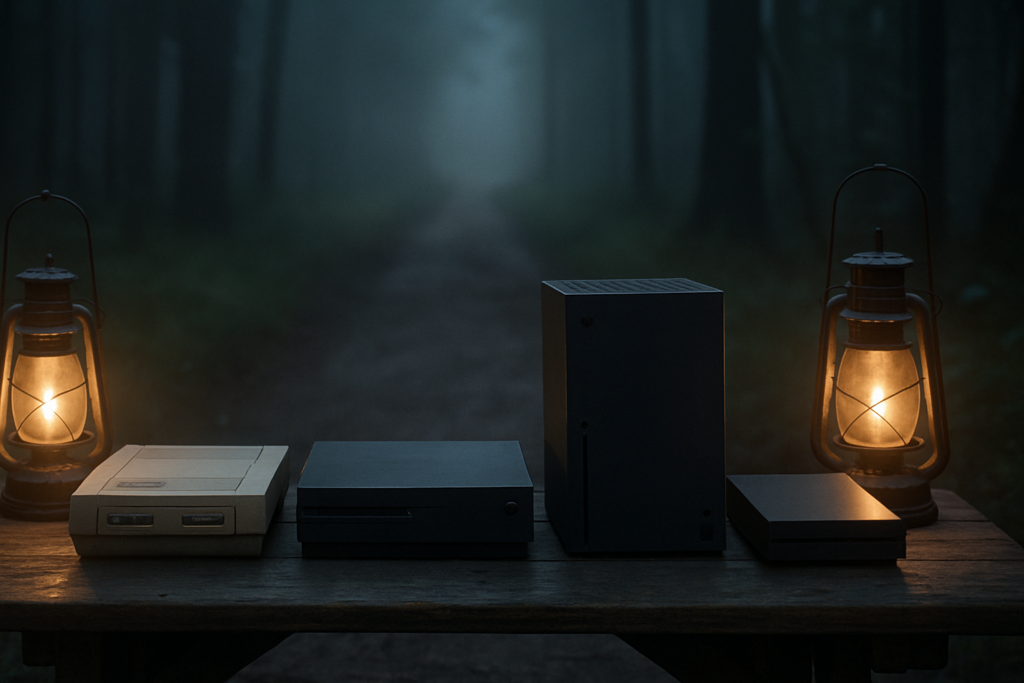
Where the War Stands Now
In 2026, the console rivalry between PlayStation and Xbox looks less like a clash of giants and more like a battle of ecosystems. Globally, PlayStation still holds a slight market share edge hovering around 52% compared to Xbox’s 45%, with the remaining slice claimed by Nintendo and emerging cloud native platforms. Unit sales tell part of the story, but it’s the fight for long term user hours and subscription lock in that matters now.
Xbox has gained serious ground thanks to Game Pass and its aggressive cloud rollout, pulling in users who value flexibility over traditional console play. Meanwhile, PlayStation has leaned into rich, sprawling exclusives and a polished hardware experience to keep its die hard base engaged.
But here’s the real shift: audiences aren’t sticking to one side like they used to. Dual ownership is rising, especially among core and returning gamers. Platform loyalty is now tied less to brand identity and more to where your favorite games, friends, or creators live. Both companies know it and are betting big on keeping players inside their digital walls. The winner isn’t just selling consoles anymore they’re building habits.
Features and Power: Who’s Got the Edge?
The battle between PlayStation and Xbox in 2026 is no longer just about raw horsepower it’s about the entire content and service package. Here’s how both platforms stack up across hardware, exclusives, and subscriptions.
Hardware Showdown: Performance, Speed, Graphics
Both consoles have reached impressive levels of technical refinement. However, their approaches subtlely differ:
PlayStation 5 Pro has leaned into optimized performance with targeted enhancements in ray tracing and frame stability.
Xbox Series X2 brings raw power, including faster load times and improved energy efficiency, making it a consistent top performer in benchmarks.
Graphical Fidelity: Both support 4K gaming and ray tracing, but PlayStation has an edge in cinematic rendering, while Xbox delivers more stable performance during heavy gameplay sessions.
Exclusive Titles and Studio Investments
Exclusives continue to define the unique flavor of each platform. Studio strategy plays a major role in brand loyalties:
Sony doubles down on narrative driven blockbusters think deep storytelling and award winning visuals. Franchises like Horizon, Spider Man, and Last of Us continue to anchor the PlayStation brand.
Microsoft, on the other hand, has broadened its first party reach with major acquisitions, including Bethesda and Activision Blizzard. This has transformed Xbox into a hub for expansive libraries and varied IPs like Starfield, The Elder Scrolls, and Call of Duty.
Key Takeaway: Sony focuses on a few powerful exclusives, while Xbox invests in breadth and accessibility of content across genres.
Subscription Services: PS Plus vs Xbox Game Pass
Service ecosystems have become central to the console experience. Both platforms offer robust subscription models with distinct strengths:
PlayStation Plus has layered its offering into Essentials, Extra, and Premium tiers, focusing on high quality curation and a growing catalog of retro PlayStation titles.
Xbox Game Pass continues its aggressive approach offering day one releases from its ever expanding studio roster and deep integration with PC, cloud, and mobile devices.
At a Glance:
Game Pass leads in day one value and cross platform accessibility.
PS Plus leans on exclusivity and legacy content to maintain its appeal.
Final Thoughts
In 2026, there’s no outright winner in terms of features both PlayStation and Xbox offer best in class experiences depending on what players prioritize: cinematic exclusives with a polished ecosystem (PlayStation) versus expansive access and content flexibility (Xbox).
Ecosystem & Player Experience
In 2026, a console’s success relies on much more than raw power or exclusive titles. The way players interact with the system day to day the ecosystem plays a major role in brand loyalty. Here’s how PlayStation and Xbox measure up when it comes to usability, connectivity, and forward thinking platform features.
User Interface and Community Features
PlayStation offers a sleek, cinematic UI that puts games and media front and center. The quick access Control Center allows players to hop between content with minimal disruption.
Xbox leans into a familiar, customizable dashboard designed around Game Pass discovery and social integration.
Both offer built in social tools, but Xbox’s deep integration with Discord and Twitch gives it an edge for streamers and community engagement.
Online Stability and Cross Play
Online experiences are only as good as the infrastructure they rely on:
Xbox Live remains a benchmark for stability and uptime, with consistent performance across titles.
PlayStation Network has improved significantly, though it occasionally lags behind in patch rollouts and matchmaking speed.
Cross play is now expected across major games. Xbox supports it more universally, while PlayStation allows it selectively.
Backward Compatibility and Game Libraries
Backward compatibility continues to shape purchasing decisions:
Xbox Series X|S supports a robust catalog of Xbox, Xbox 360, and Xbox One titles making it a strong pick for long time gamers.
PlayStation 5 supports most PS4 games, with some PS3 classics available through PlayStation Plus.
Cloud Gaming and Mobile Integration
Both platforms have pushed into the cloud space, but who does it better?
Xbox Cloud Gaming (xCloud) allows Game Pass subscribers to stream full games to mobile devices, web browsers, and even low spec PCs.
PlayStation’s cloud offerings have expanded through PS Plus Premium, but performance and device availability can be hit or miss.
Mobile connectivity and second screen experiences are becoming more refined, though Xbox holds the lead in seamless sync across devices.
Verdict
For seamless ecosystem and online experience, Xbox currently leads due to its integrated cross play, stable infrastructure, and cloud first vision.
PlayStation offers a more immersive interface and polished design, but with slightly more limitations on flexibility and reach.
First Party Games vs. Studio Strategy

Two Distinct Approaches to Exclusive Content
When it comes to first party games, Sony and Microsoft have taken notably different paths, each with its own strengths:
Sony leans into prestige, delivering blockbuster experiences that focus on high quality storytelling and advanced game design.
Think titles like The Last of Us Part III, Spider Man: Legacy, and Horizon: New Earth.
These games often serve as system sellers, generating excitement and cultural buzz.
Microsoft takes a broader approach, emphasizing scale, quantity, and accessibility.
Its strategy centers on delivering a massive, diverse catalog through Xbox Game Studios.
Day one Game Pass releases make quality titles immediately accessible to millions.
The Power of Acquisitions
Both companies have doubled down on acquisitions to strengthen their portfolios:
Microsoft made waves with its acquisition of Bethesda and Activision Blizzard.
Franchises like Elder Scrolls, Starfield, and Call of Duty are now part of its long term ecosystem.
Integration of these studios enhances Game Pass and positions Xbox as a go to destination for open world and FPS fans.
Sony took a more focused approach, acquiring Bungie and several boutique studios.
This move supports a broader vision for live service games and multiplatform reach.
By balancing megahits with indie innovation, Sony aims to future proof its lineup.
What This Means for Players in 2026
The arms race for exclusives has reshaped the way gamers choose platforms:
Xbox players enjoy a deep, ever growing library through subscription ideal for those who value variety and accessibility.
PlayStation users continue to receive top tier, cinematic experiences designed to push hardware and immersion to new levels.
While exclusives still matter, the core difference lies in delivery:
Microsoft prioritizes access and scale
Sony prioritizes narrative impact and visual fidelity
For players in 2026, the choice often comes down to play style: breadth vs. depth.
The battle of first party games is less about who has more titles, and more about how those titles align with evolving gamer preferences.
Business Models: Who’s Playing It Smarter?
In 2026, subscriptions aren’t just add ons they’re a core battleground. Xbox Game Pass remains aggressive, throwing in day one releases, cloud streaming, and deep back catalog access at a relatively stable price. PlayStation Plus, on the other hand, has restructured its tiers and added value in depth rather than breadth giving legacy fans access to classic titles alongside modern hits. Both are betting big on ecosystem lock in, but their angles couldn’t be more different.
Hardware pricing tells another story. Microsoft has leaned into entry level options streaming ready devices, budget Series S bundles while Sony anchors its model around premium experiences, driving demand with limited editions and timed exclusives. Accessories follow suit. Xbox offers practical modularity at competitive pricing, and PlayStation sells flair at a markup think PSVR2 or DualSense Edge.
Global expansion is the next frontier. Emerging markets like India, Brazil, and Southeast Asia are seeing more localized pricing, partnerships with regional telecoms, and mobile first strategies. Microsoft is making long bets on cloud accessibility, reducing the importance of console ownership altogether. Sony, meanwhile, is strengthening retail infrastructure and exclusive regional events. Different tactics, same goal: securing the next generation of gamers before their habits harden.
In short: subscription value, pricing psychology, and international scale now matter as much as gigaflops and graphics.
The Bigger Picture: Culture and Influence
Fan Loyalty: The True Driver of Momentum
Beyond hardware specs and game libraries, fan culture is what fuels the long term success of both PlayStation and Xbox. By 2026, communities aren’t just consuming they’re curating gaming identities and influencing trends.
Brand allegiance matters more than ever: Fans proudly align with their platform of choice and actively promote it across social media, forums, and real world events.
User led content is key: Memes, reviews, fan art, and reactions generate organic buzz that can sway public perception.
Grassroots voices shape trends: Independent creators often have more influence than official corporate campaigns.
Creators & Content: Expanding the Ecosystem
Streamers, influencers, and content creators play a growing role in shaping how gamers experience and perceive consoles. Their platforms become unofficial sales channels and their feedback is shaping future console updates.
Livestreamers spotlight new releases, creating instant momentum for titles, especially exclusives.
YouTube deep dives and reviews guide purchase decisions, particularly among younger gamers.
Collaborations between creators and console brands (both paid and organic) are becoming routine fixture strategies.
Looking Back: The Evolution of the Console Wars
To understand the current cultural climate, it’s worth exploring the battles that brought us here. From the early PlayStation vs. Xbox rivalry in the 2000s to today’s live streamed release parties and subscription debates, the console war has morphed beyond tech specs into a cultural phenomenon.
Platforms are no longer just devices they’re entertainment ecosystems.
The rivalry now includes mobile access, content creation, and community first experiences.
For a full retrospective, visit our article: The Epic Console Wars: PlayStation, Xbox, and Nintendo Evolution.
The culture surrounding PlayStation and Xbox is no longer a byproduct it’s a central force in shaping the gaming landscape as we head toward 2027.
Final Scorecard
Side by side, the battle between PlayStation and Xbox in 2026 isn’t a clean sweep it’s a chess match. PlayStation still dominates when it comes to exclusive storytelling. Titles like “Horizon: Fractured Earth” and “Ghosts of Tsushima: Legacy” have pulled millions into Sony’s ecosystem. Their hardware is sleek, consistent, and appeals to a global fanbase that’s as loyal as it is vocal. Sony plays the prestige game, and it works.
But Xbox has been grinding smarter. Game Pass isn’t just a deal it’s an ecosystem. Their strength lies in access: hundreds of games, day one releases, and a seamless bridge across console, PC, and cloud. Xbox also made bold moves with acquisitions, and the result is a content rich platform that feels future proof. While Sony courts blockbuster hits, Xbox is building a sustainable media hub.
Who’s ahead in 2026? Sony edges out in narrative and legacy, but Xbox is gaining fast on reach, service value, and adaptability. Heading into 2027, the real winner may not be who has the most units sold but who keeps players coming back, month after month.
To understand how we got here, see the full timeline in the console war evolution.